 BE
 NL

Product information
Cardiac Science G5 CPR electrodes
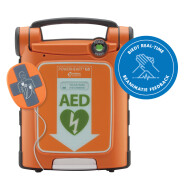
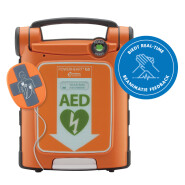
These Cardiac Science Powerheart G5 CPR electrodes are suitable for the Cardiac Science G5 AED. You can connect these electrodes to the AED prior to use (pre-connected), ensuring the AED is ready for emergencies.
These Powerheart G5 CPR electrodes feature a CPR function, providing the rescuer with real-time CPR feedback during the resuscitation process.
These electrodes are also available in a version without CPR. If you purchase a Cardiac Science Powerheart G5 AED from AED-Partner, the electrodes with CPR are included as standard.
You can connect both the G5 electrodes with CPR and the G5 electrodes without CPR to the Powerheart G5 AED. As soon as you plug the electrode cable into the AED, the device ‘reads’ which type of electrode is connected. It then automatically starts the appropriate protocol: with or without CPR feedback.
These electrodes are self-adhesive. Diagrams on the electrodes clearly indicate where they should be placed on the victim's chest.
These Cardiac Science Powerheart G5 CPR electrodes are suitable for adult use only. To use a Cardiac Science G5 AED on children weighing up to 25 kg and/or aged 8 or under, you need the Cardiac Science Powerheart G5 pediatric electrodes. These pediatric electrodes do not feature CPR feedback.
How do I replace the Cardiac Science Powerheart G5 CPR electrodes?
These electrodes have a shelf life of 2 years. This means you must replace them at least every 2 years, or sooner if the packaging is damaged or after the AED has been used.
Do the electrodes on your AED need replacing? You can order a new set of Cardiac Science Powerheart G5 CPR electrodes from AED-Partner and connect them to your AED so they are ready for immediate use. You can dispose of the old set of electrodes with small electronic waste or general household waste.
Do you also want to replace the battery of your Cardiac Science Powerheart G5 (soon) in addition to these CPR electrodes? You can purchase a Powerheart G5 battery from us.
Why do these Cardiac Science electrodes need to be replaced regularly?
The shelf life of these electrodes depends on the adhesive gel layer applied to them. Over time, this conductive gel can dry out, reducing the effectiveness of the electrodes. It is therefore vital that your AED is always equipped with electrodes that are within their validity period.
Service subscription
Regular maintenance ensures your AED is always ready for optimal use. You can take out a service subscription with AED-Partner to handle this maintenance. We will notify you, for instance, when the battery and/or electrodes of your AED(s) need replacing. We also provide on-site maintenance within 6 hours following an incident. Do you have any questions? Our Customer Service team is happy to help.
More about Cardiac Science
Cardiac Science is a global leader in the field of AEDs. Cardiac Science AEDs are known for their high reliability, robust design, and simple operation. This makes them suitable for both trained and untrained rescuers. Cardiac Science is also the only brand in the world to offer a lifetime warranty on its AED batteries.
In addition to AEDs, Cardiac Science offers a wide range of matching accessories, such as carrying bags, wall brackets, batteries, and electrodes for adults, children, and training.
Specifications
| Article number | 0594 |
|---|---|
| Supplier article number | XELAED002C |
| Article group | Elektrodes |
| Product line | Powerheart G5 |
| Brand | Cardiac Science |
| Category | AED electrodes |
| Medical Device according to MDR | MDD I |
| Weight | 0.15 |
| Length | 18 |
| Width | 17 |
| Height | 3 |
Additional specifications
| Général | |
|---|---|
| Péremption électrodes | 24 maanden |
| Électrodes pédiatriques | No |
| Électrodes adulte | Yes |
| Électrodes avec capteur CPR | Yes |
Cardiac Science Powerheart G5 AED electrodes CPR adult
The Cardiac Science G5 CPR electrodes are suitable for use on adults and compatible with the Powerheart G5 AED. The electrodes feature an integrated CPR sensor that provides feedback on the depth and rate of chest compressions during resuscitation.