 BE
BE  NL
NL 
AED stands for Automated External Defibrillator.
AED stands for Automated External Defibrillator.
An AED (Automated External Defibrillator) is a portable medical device that can normalize heart rhythm in case of cardiac arrest*.
In common parlance, people often speak of a ‘cardiac arrest’. Officially, it is referred to as circulatory arrest, because the heart is still beating (chaotically), but is no longer pumping blood.
During cardiac arrest*, the heart trembles chaotically. This is also called atrial fibrillation and causes the heart to no longer contract properly to pump blood.
An AED is then needed to give the heart an electrical shock, which causes the heart to stop fibrillating and regain a normal heart rhythm.
In common parlance, people often speak of a ‘cardiac arrest’. Officially, it is referred to as circulatory arrest, because the heart is still beating (chaotically), but is no longer pumping blood.
In case of cardiac arrest*, the heart beats erratically, preventing it from effectively contracting and pumping blood. Chest compressions help the heart to continue pumping blood and ensure vital organs receive oxygen.
The only way to stop the heart from beating chaotically (ventricular fibrillation) is by administering an electric shock with an AED. This stimulates the heart to return to a normal rhythm and pump oxygen-rich blood on its own.
In common parlance, people often speak of a ‘cardiac arrest’. Officially, it is referred to as circulatory arrest, because the heart is still beating (chaotically), but is no longer pumping blood.
In the world of AEDs, there are two types of AEDs: semi-automatic and fully automatic. Semi-automatic AEDs are also called semi-automats.
When you connect an AED, it always assesses whether the heart needs an electric shock. This is the same for semi-automatic and fully automatic devices. The difference between these types lies in the delivery of this shock. With a semi-automatic device, you must press the shock button yourself, after which the AED will count down and administer the shock. A fully automatic AED administers the shock completely automatically.
AEDs with real-time CPR feedback give the rescuer immediate feedback on the depth and speed of chest compressions. For example, the AED says “Press harder“.
With these tips, the rescuer can immediately increase the quality of resuscitation and thus the victim's chances of survival.
Every AED has an IP rating. This code indicates how well the AED is protected against dust and water. The IP rating always consists of two digits. The first digit concerns protection against dust and the second digit concerns protection against water.
Do you need an AED for use in the rain or in a very humid environment? Then choose an AED with an IP rating of at least X4. The AED will then remain ready for use in emergencies, even in situations with splashing water!
Do you need help choosing the right AED? Our Customer Service is happy to help you.
After the warranty period has expired, the manufacturer can no longer guarantee the proper functioning of the AED, even if the AED has never been used. This is partly because components can weaken due to the self-tests performed. General aging and external factors such as temperature fluctuations, humidity, and dust can also cause the reliability of the AED to decrease. This creates a risk that an AED may not function properly during deployment. Therefore, we recommend replacing the AED after 10 years at the latest.
Good question! The answer depends on a number of factors. Such as who needs to be able to use the AED and in which language the AED needs to be able to communicate.
To purchase the right AED for your situation and needs, you can use our digital AED Decision Helper use. With it, you can discover within 2 minutes which AED(s) are suitable for you.
Would you prefer to call back for help with your choice? Our Customer Service is happy to help you with no-obligation advice.
AEDs for aviation must meet specific certifications (TSO mark). These devices are tested for factors such as air pressure differences and electromagnetic radiation, ensuring they do not interfere with an aircraft's onboard systems. Not every standard model can simply be brought aboard a commercial aircraft.
For specific questions about this, please contact our Customer Service.
During a cardiac arrest*, the heart vibrates chaotically. As a result, the heart no longer pumps blood. You can then use an automated external defibrillator (AED) to stimulate a normal heart rhythm.
The AED does this using an electrical shock. To determine if a shock is needed, the AED always first detects if there is a shockable rhythm. If so, a fully automatic AED will deliver a shock itself. If you use a semi-automatic AED, you must press the shock button yourself to administer the shock.
An AED will not deliver a shock if the heart is not beating at all, or if someone is unconscious while the heart is beating properly.
In common parlance, people often speak of a ‘cardiac arrest’. Officially, it is referred to as circulatory arrest, because the heart is still beating (chaotically), but is no longer pumping blood.
You turn on an AED device using the ON button or by opening the lid. After this, spoken and/or visual instructions start to help you use the AED. First, you attach two self-adhesive electrodes to the victim's bare chest. Next, the AED analyzes the heart rhythm. Does the device detect heart activity and is a shock needed? Depending on the type and brand of AED, you either administer the shock yourself using a button, or the AED administers the shock automatically. The goal of this electric shock is to stop the fibrillation so that the heart can resume a normal rhythm.
An AED will only shock the heart if it is absolutely necessary and the AED detects a shockable rhythm. The AED will not deliver a shock if the heart is still working and the victim is, for example, unconscious, or if the heart has stopped beating altogether.
Everyone! AEDs are designed so that experienced and inexperienced rescuers can and are allowed to use them.
AEDs are very user-friendly and guide you through all CPR steps with (spoken and/or visual) instructions. Even if you have never seen or used an AED before, you can use an AED in an emergency and thus save a life!
Yes, anyone is allowed to and can use an AED. An Automatic External Defibrillator is designed so that it can be operated by anyone, even without medical knowledge or a first aid certificate. As soon as you turn on the device, a voice tells you exactly what to do. The AED analyzes the heart rhythm itself and only delivers a shock if it is truly necessary. So you cannot do it wrong. The 112 emergency call center also guides you through the entire resuscitation process.
In principle, anyone at the office may use the AED. Although company first responders (BHV'ers) are trained for this, it is important to act immediately in an emergency. The time until the first shock is crucial for the chance of survival. It is wise to instruct as many employees as possible on where the AED is located and how it works.
Good news: you can't use an AED incorrectly. An AED guides you, as a first responder, step by step through all the actions. For example, you'll receive tips on the rhythm of chest compressions, and the AED will tell you how to attach the electrodes.
In addition, each AED is designed so that it can only deliver a shock if a shockable rhythm has been measured. This applies to both semi-automatic and fully automatic AEDs.
No, an AED is safe. An AED will only deliver a shock if an automatic analysis by the AED shows that the heart is fibrillating and a shock is needed.
It is technically impossible for the AED to deliver a shock to someone with a normal heart rhythm. Therefore, you can always use an AED safely.
A cardiac arrest can happen to anyone, anywhere. This also applies to humid environments like by a swimming pool, or in pouring rain. The victim's skin may therefore be wet.
For the proper functioning of the AED, it's important that the electrodes are firmly attached to the chest. This doesn't work well if the chest is wet. Therefore, with a wet victim, always dry the skin first before applying the electrodes.
No. Most AEDs have large buttons or a touchscreen that can be operated with gloves on, such as warm (winter) gloves or work gloves. Nevertheless, it is better to take off your (work) gloves. This way, you can more easily cut through a shirt or bra with the scissors from the Rescue Kit. It is also difficult to properly attach the electrodes to the victim's chest with work gloves. Therefore, always take off your (work) gloves as soon as you start CPR.
You can, of course, operate an AED with the nitrile (hygienic) disposable gloves from the Rescue Kit.
Yes, an AED is safe to use on children. For babies and children up to 8 years old (or weighing less than 25 kilograms), it is preferable to use special pediatric electrodes or a child button. If you do not have these options in an emergency, use the regular adult electrodes. In any case, always follow the AED's instructions.
Cardiac arrest in children is fortunately rare. In the Netherlands, approximately 300 children per year need to be resuscitated outside the hospital. That is significantly less than for adults: an average of 300 per week.
A cardiac arrest in a child is life-threatening and often results from an acute respiratory or circulatory problem.
Source: Dutch Resuscitation Council
A child button is a switch on the AED that directly adjusts the device for a child. For this, you do not need separate child electrodes; you use the universal electrodes. Sometimes it is not a button, but the AED has a special child key that activates the child mode.
Once you press the button or turn the key, the AED lowers the shock energy and adjusts its voice prompts for child resuscitation.
In case of cardiac arrest*, an AED can deliver an electric shock to the heart to stimulate a normal heart rhythm. For using an AED on children younger than 8 years old or weighing less than 25 kg, we recommend child electrodes or an AED with a special child button or child key. This is not mandatory: in an emergency, you can also use adult electrodes and attach them to the child's chest and back.
In common parlance, people often speak of a ‘cardiac arrest’. Officially, it is referred to as circulatory arrest, because the heart is still beating (chaotically), but is no longer pumping blood.
Children's electrodes are special pads that reduce the current level of the shock. You use them for children up to approximately 8 years old or up to a weight of 25 kilograms. Due to the smaller size of the electrodes and the lower energy level, the electric shock delivered by the AED is better suited to a child's smaller body.
You can save lives with an AED! When someone suffers a cardiac arrest, the heart beats erratically (fibrillation) and vital organs receive insufficient oxygen. For every minute the heart fibrillates, the victim's chance of survival decreases by 7-10%. Acting quickly is therefore crucial. As a bystander, you play an important role in this. By quickly calling 112 and starting CPR (including using an AED), you help the victim until the ambulance arrives.
Direct help is only possible if an AED is available quickly. Are you an owner of an AED? Then register your AED with the Belgian 'FOD Volksgezondheid'! This ensures that citizen responders in need can quickly find and retrieve the nearest AED. Together, we make the Benelux heart-safer!
Once someone has a cardiac arrest, their chance of survival decreases by about 10% every minute. That is why it is important to call 112 as quickly as possible, start CPR, and connect an AED.
In common parlance, people often speak of a ‘cardiac arrest’. Officially, it is referred to as circulatory arrest, because the heart is still beating (chaotically), but is no longer pumping blood.
In the event of cardiac arrest*, speed is of vital importance. The sooner bystanders start resuscitating, the greater the victim's chance of survival. That is why the term "6-minute zone" is often used: ideally, you can always find an AED within 6 minutes and bring it to the victim.
Would you like to contribute to a comprehensive AED network and the 6-minute zone? Then it's a good idea to think about the placement of your AED. For example, is the AED located in a busy place and is it easily found with signage? And also consider the accessibility of your AED. Can you quickly grab the AED in an emergency, or is it locked away? By smart placement, you can save even more lives with your AED. Do you have questions about the right location for your current or planned AEDs? Our Customer Service is happy to help you!
In common parlance, people often speak of a ‘cardiac arrest’. Officially, it is referred to as circulatory arrest, because the heart is still beating (chaotically), but is no longer pumping blood.
In Belgium, registering an AED is mandatory. This can be done via a form on the website of the FPS Public Health. Many AEDs are needed to ensure the best possible coverage. Every AED helps!
In the event of a cardiac arrest*, the chance of survival is greatest if bystanders start CPR within 6 minutes. In an emergency, the Belgian emergency response system helps citizen responders quickly locate the nearest available AED.
You too can register your AED with FOD Volksgezondheid completely free of charge. This way, you contribute to a quick response in your neighborhood. And that saves lives! You can register your AED with the from via their website. Heb je al een account bij HartslagNu? Log dan in en voeg de nieuwe AED toe.
Would you like help registering an AED with FOD Volksgezondheid? AED-Partner is happy to help you.
In common parlance, people often speak of a ‘cardiac arrest’. Officially, it is referred to as circulatory arrest, because the heart is still beating (chaotically), but is no longer pumping blood.
Most public AEDs are registered in the system of the Belgian 'FOD Volksgezondheid'. Check the . for a recent overview website or in the app from HartslagNu.
Please note that many AEDs are located indoors and are only accessible during office hours. An outdoor cabinet makes an AED available to the neighborhood 24/7.
Usually, one AED for multiple floors is not sufficient. In the event of cardiac arrest, it is vital that the victim is connected to an AED within 6 minutes. If you have to go up or down stairs or use an elevator to another floor to find an AED, you may not make that 6-minute window. Therefore, for optimal cardiac safety, it is often better to place an AED on each floor, or at every other floor. Our Customer Service gladly thinks with you about an efficient distribution and placement of AEDs.
The rule of thumb is that you should be able to administer the first shock within six minutes. This means that an AED should be accessible within a roughly two-minute walk, so that you also have time to run back and connect the AED. For a large floor area with obstacles or corridors, multiple devices are therefore often necessary. Our Customer Service is happy to help you with no-obligation advice.
For comprehensive coverage, we always look at the so-called 6-minute zone. This means that within the entire municipality, there must be an AED available within a radius of approximately 500 meters, which is accessible 24/7. AED-Partner can create a coverage plan based on local data and information from HartslagNu. For more information, please contact our Customer Service.
You protect an AED by placing it in a sturdy outdoor cabinet. These cabinets are often made of impact-resistant material and are also available with extra security options, such as a PIN code lock or an alarm that goes off as soon as the cabinet is opened.
You can also prevent vandalism and theft by placing the cabinet in a conspicuous (busy) location within the view of cameras.
At AED-Partner you can also a theft insurance closing the deal. Is your AED stolen? Then we will ensure that you receive a replacement AED quickly.
Yes! During sports events, there is an increased risk of cardiac arrest due to the physical exertion participants undertake. By renting an AED for the duration of the match or tournament, you meet safety requirements without having to purchase a device. At AED-Partner, you can rent an AED from 1 week onwards.
Want to know more? Then check out our options for renting and leasing contact our Customer Service.
Temporary rental is intended for short periods from one week, ideal for events. The HeartBeatService is a long-term lease form (5 or 8 years) including extensive maintenance., remote monitoring and a storage closet.
Yes. By leasing an AED, you spread the costs and avoid a large upfront investment. At AED-Partner, there is a service subscription always included in the lease. This ensures that the AED in your hotel, café, or restaurant is always ready for use and that batteries and electrodes are replaced in a timely manner.
Yes, leasing is very suitable for retail chains with multiple locations. This way, you ensure a standard for heart safety across all branches, without a large upfront investment. The maintenance of the AEDs is also immediately well-arranged: we monitor all AEDs remotely and take immediate action if parts are (almost) due for replacement or if the AED has been used.
Want to know more? Then check out our options for renting and leasing contact our Customer Service.
Yes, municipalities can lease one or more AEDs from us in combination with a service subscription. This way, you can ensure comprehensive AED coverage in your municipality at an affordable rate in one go, and you can be certain that maintenance is well taken care of.
Want to know more? Then check out our options for renting and leasing contact our Customer Service.
You can easily request a quote via the contact form on this page or by contacting us directly Customer Service. We are happy to discuss your wishes and send you a customized proposal.
This means that we remotely monitor the status of the AED. We do this via our AED-Monitor, a small sensor that we place with the AED. With this, we can continuously check remotely whether the battery is still full and whether the electrodes are still good. This way, you don't have to check daily whether your leased AED is still ready for use.
You can report a claim 24/7 with us via +31 (0)499 49 00 16. We ensure that the AED is quickly returned to operational readiness. Are you temporarily renting an AED? Then we will cover the potential costs for replacement electrodes. Have you opted for our HeartBeatService (lease)? Then we will replace the electrodes and batteries free of charge after use.
Yes! Whether you rent or lease, the AED is always delivered fully complete. This includes a battery, electrodes, a carrying case, and a Rescue Kit so you can act immediately in an emergency.
Orders placed on weekdays before 4:00 PM will be shipped the same day. AED-Partner strives to deliver all webshop products from stock. If a product is unexpectedly out of stock, we will contact you within 1 business day.
To help you with a quick, hygienic resuscitation, a Rescue Kit is essential. That's why with every AED order, you always receive a free:
Of course, you can always cancel an order.
Have you not received your order yet? Then you can contact our Customer Service. We are happy to help you.
Have you already received your order? In that case, you can submit a return.
Did you purchase an AED or another product from AED-Partner and are you not satisfied? As a consumer, you have the legal right of withdrawal to return your purchase within 14 days of receipt. To do so, you can fill out our return form .
No, in the Netherlands, there is no specific legal obligation for the inspection of an AED. However, manufacturers recommend maintenance to ensure the AED's operability during resuscitation.
Although the law does not prescribe an annual inspection, as a manager or employer you are responsible for ensuring that your AED is always in good working order. This means, among other things, that you must replace the batteries and electrodes in a timely manner and carry out any software updates. If you do not do this, dried-out electrodes or a depleted battery can render the AED unusable at a critical moment.
You can completely outsource the maintenance of your AED by service subscription to conclude with us. This way, you are always assured of a working device. Do you buy an AED from AED-Partner? Then you always get the first year of maintenance for free!
For a properly functioning AED, maintenance is very important. We therefore advise you to take out a service subscription with us. AED-Partner will then keep track of when your AED, electrodes, and batteries are due for maintenance or replacement. And has your AED been deployed, or is it malfunctioning? Then we are always on location within 6 hours, even outside office hours!
We can take care of everything for you with remote monitoring, but also to simply give a signal when maintenance is necessary.
An AED performs daily and weekly self-tests. You must then check yourself whether the AED is still working properly via the status indicator. This is usually a green flashing light or checkmark. Does a red light turn on or do you hear a beep? Then the AED is malfunctioning and action is required.
Additionally, you have to manually keep track of the expiration dates of the battery and electrodes. This way, you can ensure that they are replaced on time. “We are happy to take these checks off your hands: with a service subscription , we ensure that your AED is always ready for use.
Without maintenance, it is highly likely that an AED will not function properly in an emergency. The most common problems with neglected maintenance are dead batteries or dried-out electrodes. This can prevent the AED from delivering a life-saving shock.
Besides this medical risk, you as an owner run a legal risk. In case of negligence, you can be held liable because you fail to meet your duty of care. Therefore, it is important that you regularly check and maintain an AED. You can outsource this care by taking out a service subscription with AED-Partner. This way, you can be sure that your AED is always ready for use.
Most AED batteries last 4 to 8 years. For optimal deployability, it is important to replace the battery after each use and before the battery's expiration date.
Good to know: there is never an expiration date on the battery, as its life only begins after installation. We therefore always advise you to take out a service subscription . AED-Partner will keep track of when the battery (plus AED and electrodes) require maintenance for you, among other things. This way, you can be sure that your AED will always work!
If the battery has insufficient capacity, the AED can no longer deliver a life-saving shock. A (nearly) empty battery can also cause the AED to fail to start up, or to shut down during resuscitation. This directly endangers the victim's safety. Fortunately, every AED indicates in a timely manner when the battery is nearly empty. This is often indicated by a red light or a beep. Do you hear or see this? Then the battery must be replaced immediately.
We can completely take care of this maintenance for you. With a service subscription we keep track of the expiry dates of the battery and electrodes, among other things, and ensure that your AED is always maintained on time.
Always replace electrodes after use, if the packaging is damaged, and before the expiry date. This ensures that the AED and electrodes function properly in an emergency.
AED-Partner can notify you when the electrodes (and batteries) of your AED need to be replaced and arrange for the replacement. For this, you can take out a service subscription . Unsure which service plan best suits your situation? Our Customer Service likes to think along with you.
For reporting complaints, please call our Customer Service quickly at +32 (0)11 42 03 45.
Do you have an AED-Partner service subscription for the maintenance of your AED? If so, you can report a fault to us 24 hours a day, 7 days a week. We will resolve the fault for you within 6 hours. Sometimes this can be done with telephone assistance and, if necessary, we will come to your location. Even outside of office hours!
If on-site repair by our service team proves impossible, you will immediately receive a replacement AED on loan. This ensures you always have a life-saving device.
Is your AED malfunctioning and do you not have a service subscription with us? Or are you not (yet) a customer of ours? In that case too, please contact our Customer Service as soon as possible. We are happy to help!
No, that's not always necessary. The battery and the electrodes often have different expiration dates. The electrodes (pads) dry out over time and generally last about 2 years, while a battery often needs replacing only after 4 to 5 years.
Yet it is wise to keep this well in mind: if either has expired, the AED can no longer be used. We can help you with this: if you take out a service subscription at our place, we ensure that the battery and electrodes are always replaced on time, among other things.
Report an incident? Then quickly call our Customer Service on +32 (0)11 42 03 45.
If you have an AED Partner service subscription, you can report the deployment of your AED 24 hours a day, 7 days a week with our Customer Service. We will be on-site for maintenance within 6 hours. Also outside of office hours!
During our visit, we will inspect the AED and replace components such as electrodes, battery, or safeset. If necessary, we will read out the AED and send data (ECG) to the attending physician.
In case of a common malfunction, a manufacturer recalls an entire series of products as a precaution. Is there a recall for a product you purchased from us? We will then inform you as soon as possible.
The technical lifespan of an AED expires after 10 years. Do you have an AED that is more than 10 years old? We would be happy to receive it back so we can recycle it for you.
How does it work?
1. Email us your full name and the AED details.
2. You will receive a shipping label to send the AED to our head office. You will pay a one-time fee of €15 for this.
3. Upon receipt, we will send the AED (along with other AEDs to be recycled) to our recycling partner*. The invoice for the shipping label serves as your recycling certificate.
*For the recycling of our products, we work together with Stichting OPEN and WeCycle. Through WeCycle, we innovatively reuse replaced materials and dispose of them as circularly as possible.
An AED trainer offers participants the opportunity to safely practice CPR with the use of an AED. This allows them to act confidently in life-saving situations during a real emergency.
An AED trainer looks almost the same as a real, deployable AED. However, there is one major visual difference to prevent confusion in an emergency: many AED trainers have a different color (e.g., red or orange) compared to a real AED.
An AED trainer simulates a life-like resuscitation situation, including voice prompts. This allows trainees to practice turning on the AED and correctly applying the electrode pads, among other things. Sometimes it is also possible to press the shock button. However, a practice AED or training AED can never deliver a shock, as the electrode pads are not connected to a power source.
An AED trainer (practice AED) is intended for training and can never deliver a real electric shock. This allows trainees to practice resuscitation and the use of an AED realistically and safely.
AED-Partner advises that an AED cabinet should always be placed at eye level. Also, pay close attention to the height of the handle. If you ensure that it is approximately 1.25 meters from the ground, the cabinet will also be easy to open for wheelchair users.
AED-Partner specializes in the installation of AED cabinets. Would you like us to handle the installation of the cabinet? Or would you like advice on the right location? Our Customer Service is happy to assist you.
Yes! By placing a defibrillator outdoors in a public space, you give the defibrillator a societal function. Bystanders and citizen responders can then use the defibrillator in an emergency to save a life.
Hanging an AED outdoors is especially interesting in places with many passers-by, such as residential areas. You also contribute to a comprehensive AED network and rapid assistance in emergencies with an outdoor AED at business parks or in nature.
To hang an AED outside, you need a AED cabinet of a totem is needed. For example, you can choose a cabinet with a keypad lock or heating. Besides the right cabinet, the right location is also important. An AED (cabinet), for instance, should never be placed in direct sunlight. AED-Partner specializes in advice on and installation of outdoor AED cabinets. Our Customer Service is happy to help you with no-obligation advice.
An AED operates on a special AED battery. It is therefore not necessary to connect the AED to the mains.
If you place the AED in an AED cabinet with a PIN code, ventilation, cooling, heating, and/or Wi-Fi, then the AED cabinet does require electricity and you must connect the cabinet to a power outlet.
We specialize in AED cabinets and can also help you with the assembly of the right cabinet in the right place. Would you like to know more about this? Our Customer Service is happy to assist you.
The right manikin depends on the learners' training level, the desired feedback functionality, and the available budget. Our Customer Service is happy to help you with no-obligation advice.
Yes, you can use all training AEDs with all CPR and choking manikins.
Yes. For hygienic reasons, we recommend that each student use new lung bags, a disposable face mask, and/or a breathing mask.
Yes, a resuscitation dummy is very suitable for safely practicing giving mouth-to-mouth resuscitation. It is important that each trainee uses new lung bags, a disposable face mask, and/or a breathing mask. Also, ensure the dummy is properly cleaned regularly.
Advanced manikins usually have a (digital) feedback system for correct depth, pace, and hand position. Trainees and/or trainers often receive this feedback via an app or screen. With simpler (basic) models, you also get feedback, for example, through the audible and tactile click system in the manikin's chest or by performing a visual check yourself.
With hygiene in mind, it is important to clean a CPR manikin or choking manikin after each use. Regular maintenance will also ensure the manikin lasts longer. You can clean the outside (skin) of the manikin with a mild disinfectant, disinfectant wipes, or according to the manufacturer's guidelines. We also recommend using replaceable lung bags, separate face skins, and/or a ventilation mask.
This depends on the usage, the type of manikin, the trainer's hygiene protocol, and the manufacturer's guidelines. For group classes, it is generally advisable to replace disposable lung bags and/or airways after each participant or training session.
With regular and careful maintenance, a CPR manikin can last for many years. Parts that move, get wet, or are frequently touched are susceptible to wear and tear and should be replaced regularly. Examples include: lung bags, face skins, and springs.
For sustainable use of a CPR or choking manikin, it is important to always store the manikin safely and transport it protected. Ensure the manikin is stored dry, dust-free, and at room temperature, for example by keeping the manikin in a special bag or case. It is also important not to place heavy objects on the manikin. This way, you prevent the manikin from getting damaged.
During resuscitation, you alternate chest compressions with rescue breaths. This helps the heart to pump blood and supply vital organs with oxygen. Resuscitation also increases the chances that an electrical shock from an AED will help the heart return to a normal rhythm.
In the event of cardiac arrest*, every second counts. Good preparation is therefore half the battle! With CPR training, you ensure that you know exactly what to do in an emergency.
During CPR training, you learn, among other things, how to recognize a cardiac arrest and how an AED works. You also practice performing chest compressions and artificial respiration, and learn when and how to call for professional help.
In common parlance, people often speak of a ‘cardiac arrest’. Officially, it is referred to as circulatory arrest, because the heart is still beating (chaotically), but is no longer pumping blood.
In addition to a CPR manikin, extra (disposable) lung bags, face skins, disinfectant wipes, a transport bag, and an AED trainer are also useful. If you use an advanced CPR manikin, you can also download and use the associated app.
Regulation (EU) 2017/745 on medical devices is a European law that applies in all EU countries. This law ensures that medical devices placed on the European market are safe for patients.
This law is also popularly known as the MDR. This abbreviation comes from the English name of this law: Medical Device Regulation. Only products that meet these requirements receive an MDR certificate.
At the moment, some AEDs still have an old certificate (MDD). These AEDs may still be sold until December 31, 2027. After December 31, 2027, only AEDs with a new certificate (MDR) may be sold.
Do you have an AED with an MDD certificate? Then you may continue to use it after December 31, 2027.
The MDR replaces the MDD: the Medical Device Directive. The MDD was a guideline, meaning that countries still needed national legislation in addition to the MDD. With the MDR, it works differently. The MDR is a regulation: a law that is directly valid and binding in all EU countries from its effective date. This way, the same rules and standards apply everywhere.
Only products that comply with the MDR will receive an MDR certificate. Currently, some AEDs still have an old certificate (MDD). These AEDs may still be sold until December 31, 2027. After December 31, 2027, only AEDs with a new certificate (MDR) may be sold.
Do you have an AED with an MDD certificate? Then you may continue to use it after December 31, 2027.
1. Wider application range: More medical devices fall under the new legislation.
2. Clinical evidence and documentation: For medical devices of class III, such as automated external defibrillators (AEDs), stricter requirements apply.
3. Systematic clinical assessment: Manufacturers of Class IIa and IIb medical devices must evaluate their clinical data and demonstrate that their device is safe and effective.
4. Documentation: stricter and clearer requirements.
5. Traceability: assistive devices are more traceable via unique identification codes (UDIs).
6. Supervision by notified bodies: the rules for supervision during and after certification have been tightened to reduce the risks of unsafe devices. Testing is carried out more frequently and in greater numbers.
7. Regulatory Affairs Responsible Person (PRRC): each manufacturer and authorized representative must appoint a responsible person to oversee regulatory compliance.
8. Renewal Approval Required: for all devices, a new approval must be sought to market them under the MDR.
9. Forwarding of notifications: supply chain participants must pass on notifications regarding supply interruptions received from a European manufacturer to their customers.
April 5, 2017
Regulation (EU) 2017/745 was published.
April 24, 2020
Due to the corona pandemic, the entry into force date was postponed to May 26, 2021.
March 15, 2023
Regulation 2023/607 entered into force due to capacity shortfalls at notified bodies. Medical devices already on the market before May 26, 2021, with an MDD certificate, may still be sold without MDR certification under certain conditions. This gave notified bodies more time to reassess medical devices. Manufacturers who wished to take advantage of this grace period had to submit and contract their device for reassessment with a notified body before May 26, 2024.
The notified body undertakes to assess the devices within a specified period. For products in higher risk classes, such as AEDs, December 31, 2027, is the final reassessment date. For products in lower risk classes, that date is December 31, 2028.
May 26, 2024
Products that do not have MDR certification or an extended MDD certificate may no longer be offered on the market.
January 10, 2025
Regulation 2024/1860 enters into force
Manufacturers are required to report supply disruptions of medical devices. If you receive such a notification from the manufacturer, please forward it to the supply chain participants downstream from you.
December 31, 2027
Devices in higher risk classes without a valid MDR certificate may no longer be sold.
December 31, 2028
Medical devices in lower risk classes without a valid MDR certificate may no longer be sold.
The new MDR regulations primarily affect market participants: manufacturers, authorized representatives, importers, and distributors of medical devices. The law defines distributors as anyone who sells or makes medical devices available on the market. Resellers of AED-Partner also fall under this category.
All market participants must ensure that the devices they offer comply with the MDR regulations. Your obligations as a market participant depend on your role in the chain. A detailed explanation of the obligations can be found in the Official Journal of the European Union.
AED-Partner complies with the MDR. If you, as a reseller of medical devices, purchase from us for resale, then the same obligations apply to you as to AED-Partner.
A selection of those obligations:
A comprehensive explanation of all obligations can be found in the Official Journal of the European Union.
If you buy or own an AED for personal use, nothing changes due to the MDR. However, you may notice that some brands or models of AEDs are no longer available for purchase. This is because not all products comply with the new regulations.
On December 31, 2027, AEDs without MDR certification will no longer be allowed to be sold. Do you, as an end customer, have an AED with an MDD certificate? Then you may continue to use it after December 31, 2027.
Are you buying an AED and then reselling it to someone else? Then you are selling a medical device. All MDR obligations that apply to AED-Partner as a seller also apply to you as a reseller.
Do you have a question about your AED and the MDR? Our Customer Service staff know the devices well and provide you with free advice.
Netherlands
Ekkersrijt 4301, 5692 DJ, Son
+32 (0)11 42 03 45
info@aedpartner.be
Belgium
Everselstraat 133, 3580 Beringen
+32 (0)11 42 03 45
info@aedpartner.be
© AED-Partner 2026
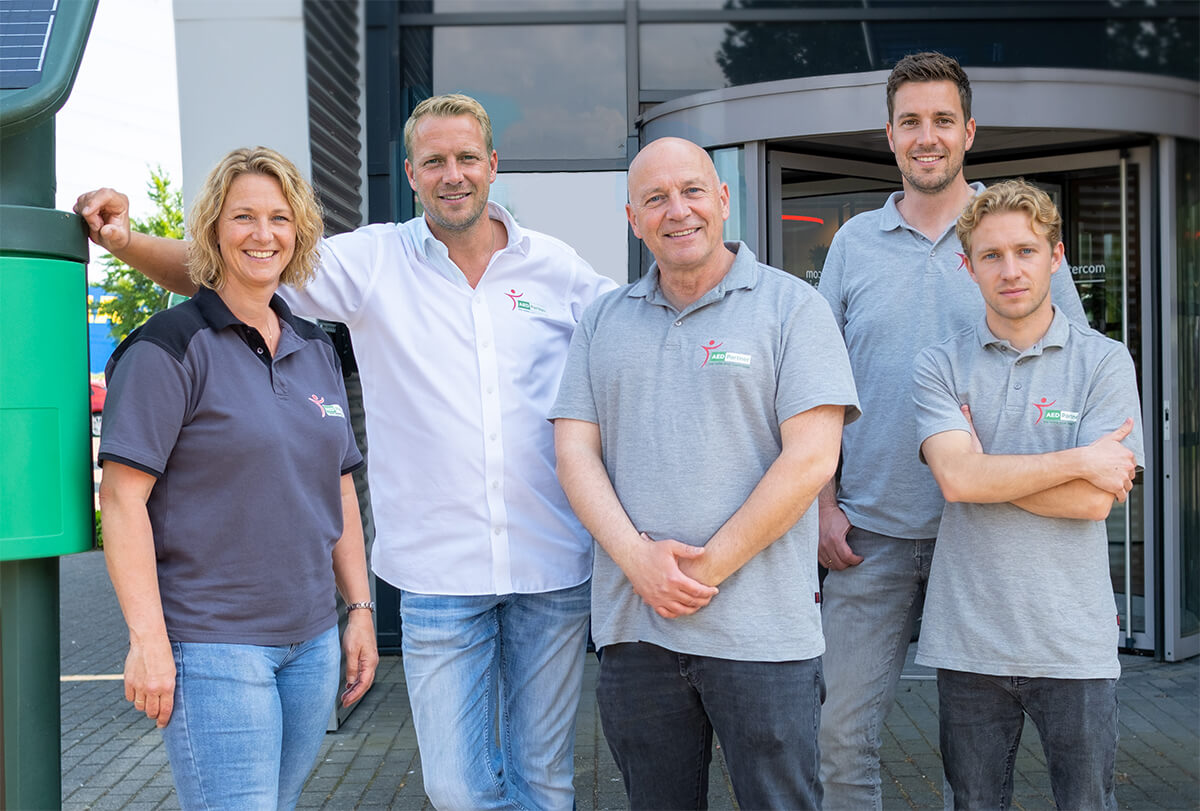
Our team will contact you as soon as possible for personal, no-obligation advice tailored to your situation.
 Dutch Dutch
  Dutch (Belgium)
 French
English (Belgium)
English (Netherlands)
French
English (Belgium)
English (Netherlands)