 BE
BE  NL
NL 
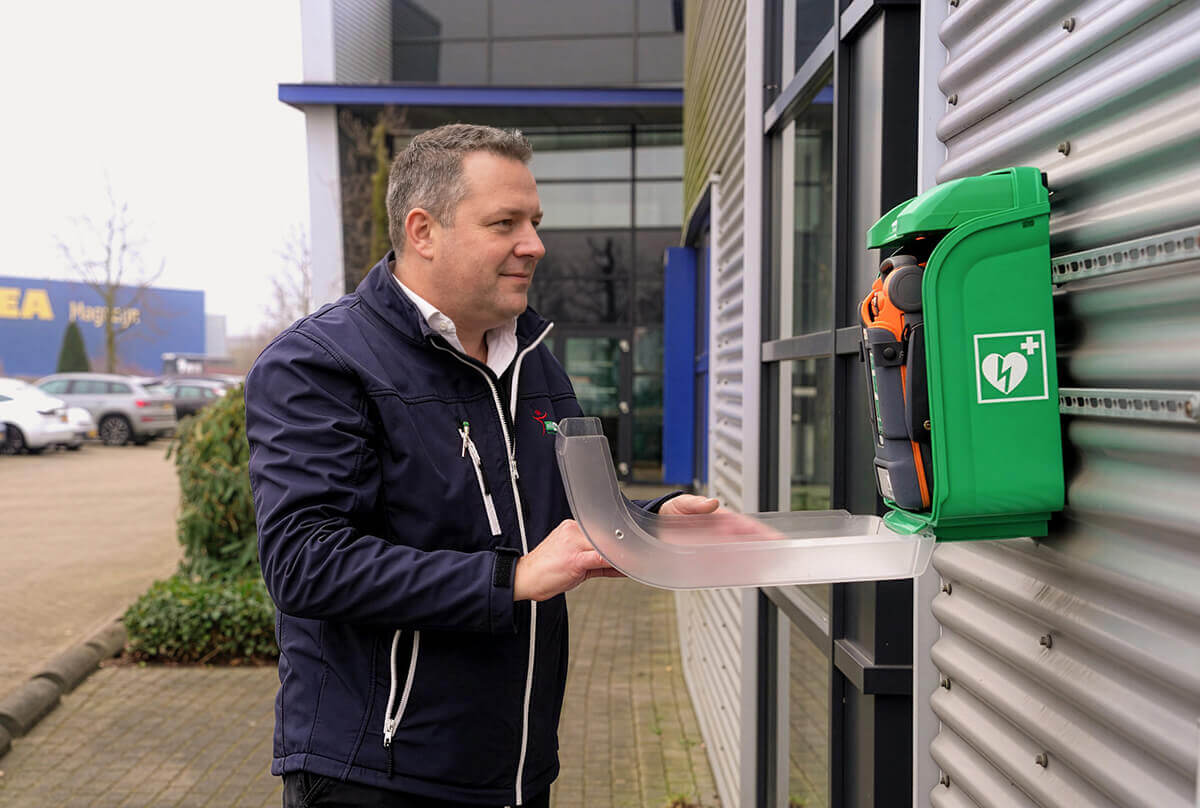
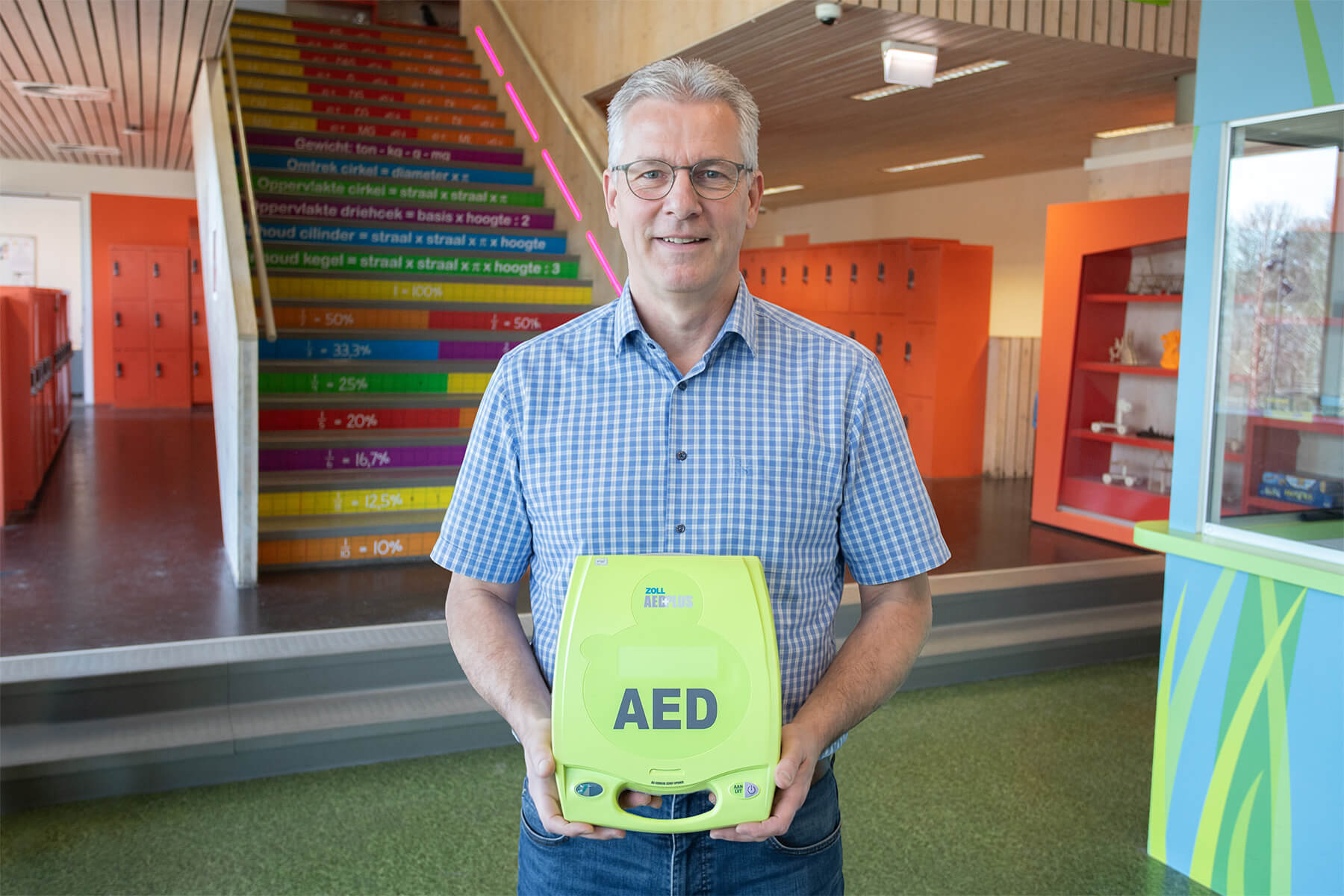
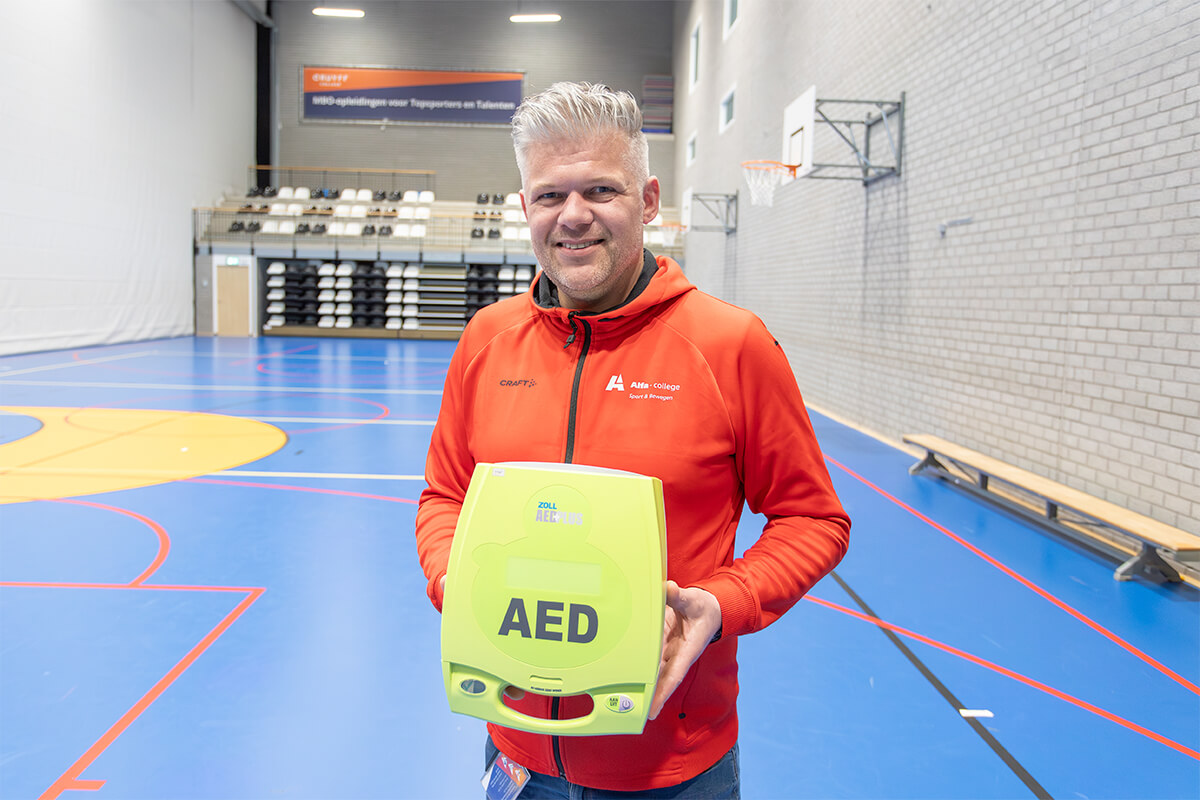
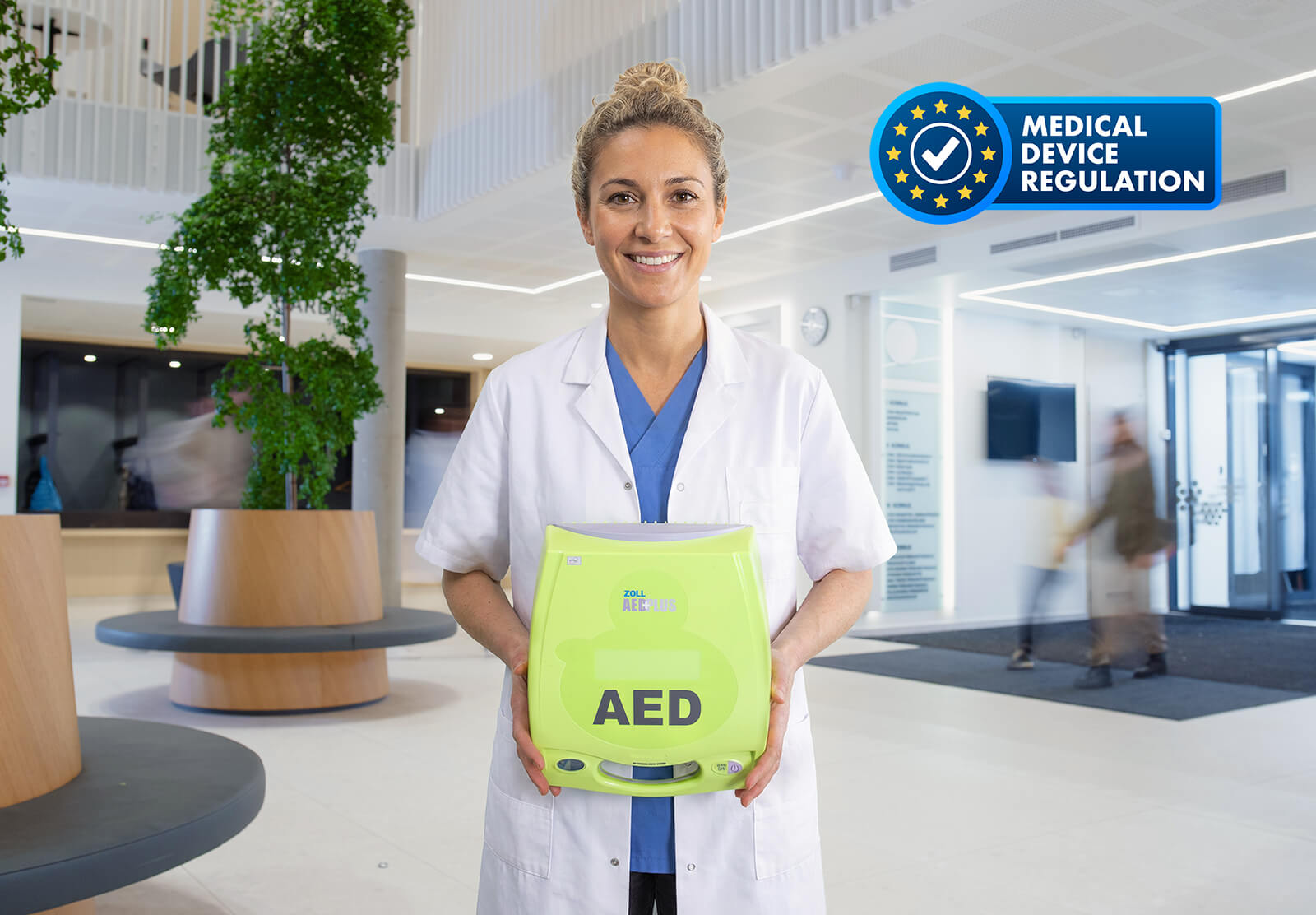
AED is the abbreviation for Automated External Defibrillator. This name describes exactly what kind of device it is and what it does:
Automatic An AED independently analyzes the victim's heart rhythm and determines if a shock is needed.
External You use the device on the outside of the body. You attach self-adhesive pads (electrodes) to the victim's bare chest.
Defibrillator In case of cardiac arrest, there is often 'fibrillation': the heart beats chaotically. The AED gives the heart an electric shock to de-fibrillate it and thus stimulates the heart to beat again in a normal rhythm.
You use an AED if you suspect someone is having a cardiac arrest. You can use an Recognize cardiac arrest to various symptoms, such as suddenly collapsing, loss of consciousness, or gasping for air. Call 112 immediately, start CPR, and have an AED fetched. The sooner you deploy an AED, the greater the victim's chance of survival. Good to know: an AED can only deliver a shock if the victim actually has a shockable heart rhythm.
Who can operate an AED.
In the Benelux, anyone can use an AED. Although resuscitation training helps to remain calm during a real incident, AEDs are designed so that a bystander without experience can also provide immediate assistance. The AED tells you exactly what to do.
Do you want to use an AED? Then turn on the AED with the ON button or by opening the cover. After this, listen carefully to the spoken and/or visual instructions.
Netherlands
Ekkersrijt 4301, 5692 DJ, Son
+32 (0)11 42 03 45
info@aedpartner.be
Belgium
Everselstraat 133, 3580 Beringen
+32 (0)11 42 03 45
info@aedpartner.be
© AED-Partner 2026
Our team will contact you as soon as possible for personal, no-obligation advice tailored to your situation.
 Dutch Dutch
  Dutch (Belgium)
 French
English (Belgium)
English (Netherlands)
French
English (Belgium)
English (Netherlands)