 NL
NL  BE
BE 
AEDs
An AED can deliver an electrical shock to the heart during a cardiac arrest, helping to restore a normal heart rhythm. In short: an AED can save someone's life! The quality of CPR plays a crucial role in this. The sooner an AED is used correctly, the greater the person's chance of survival.
That is why it is important to choose an AED that suits your specific situation. Whether you need an AED for a sports field or a portable AED for use on the go, you can rely on AED-Partner for an AED that performs when every second counts.
Read more: Why is an AED important and which one do I need?
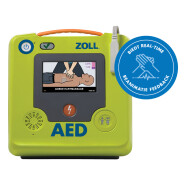
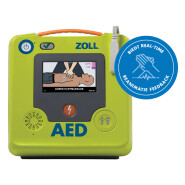
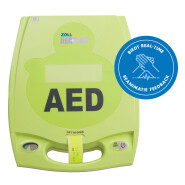
Filter
Buying an AED: how do you choose the right AED?
The right choice mainly depends on your situation. For instance, in a noisy environment, an AED with a speaker that adjusts its volume comes in handy. Are you looking for an AED for an office environment? Then a compact model that provides simple spoken instructions is often more than enough. Furthermore, an AED with a lower IP rating (such as IP21) is usually sufficient for indoor locations, whereas for outdoor use you need an AED with an IP rating of 54 or higher. With our AED Choice Assistant, you will discover within 2 minutes – completely free of charge – which AED best suits your situation.
Technical specifications (such as IP rating)
When comparing AEDs, you will notice technical terms such as the IP rating. This number indicates how well the AED is protected against dust and water. For example, an AED with an IP55 rating is well-protected against rain and fine dust. This is important if the device is placed in an outdoor cabinet or in a dusty workshop. Also make sure to check the lifespan of the battery and the electrodes. Some models last two years, while others can reach up to five years in standby mode.
Semi-automatic vs. fully automatic AED
In our webshop, you can choose between a semi-automatic and a fully automatic model for all AEDs. Simply put, the difference between these types lies in who delivers the shock. With a semi-automatic AED, you as a responder press the shock button yourself (if the device advises a shock). With a fully automatic AED, you do not need to press the shock button; this type of AED delivers the shock automatically if required. Good to know: both types of AEDs are safe to use and guide you step by step through the CPR process.
Want to know more? Read our blog to learn about the difference between a fully and semi-automatic model.
The cost of an AED: purchase and maintenance
The price of an AED varies by brand and AED type. Most devices cost between 1,200 and 2,500 euros. It is wise not to look solely at the purchase price, but also at recurring costs – such as replacing the battery or the electrodes. With a service subscription, you avoid unexpected maintenance costs and ensure that your AED is always ready for use. Good news: when you purchase an AED, you receive the first year of All-in maintenance for free.
Buying or renting an AED?
At AED-Partner, you can buy or rent an AED. For organizations seeking long-term cardiac safety, buying is usually the most cost-effective choice, as you become the owner of the device. Looking for an AED for a shorter period, such as an event or a temporary project? Then renting or leasing can be a great option. You pay a fixed monthly amount, and we take care of maintenance and any replacement of parts. This gives you the security of an AED without the large upfront investment.